
English| EUR
Suggested for you
More currencies
Choose a language
Portage Glacier sits across Portage Lake, separated from the road by open water that has widened as the glacier retreats. The question of hiking access depends on which trail you mean: the path to the glacier face itself, or the backcountry route that climbs above it. Understanding the distinction shapes how you prepare.
Quick answer
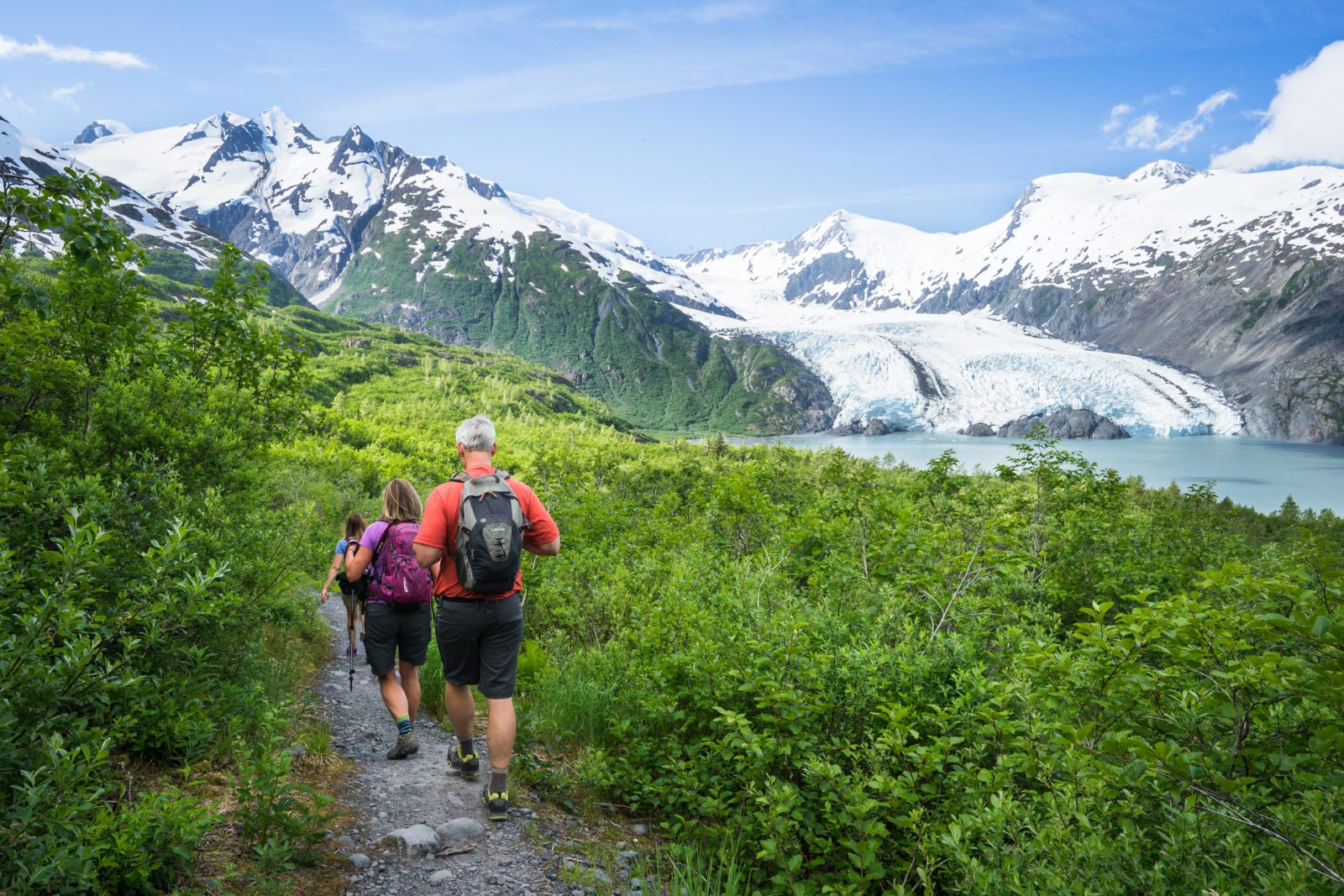
You cannot hike directly to the face of Portage Glacier because it has retreated across Portage Lake, leaving open water between the road and the ice. The only way to reach the glacier terminus is by boat. However, the Portage Pass Trail offers a strenuous 4-mile round-trip hike that climbs to an alpine pass with views overlooking the glacier and Portage Valley.
Portage Glacier has receded more than a mile since the visitor center opened in 1986, transforming what was once a roadside attraction into a distant ice mass visible only across open water. The glacier's retreat reshaped visitor access and left the original viewing platform looking out over empty lake and distant blue ice. The Portage Pass Trail provides the primary hiking experience in the area. This historic route climbs 750 feet over two miles, following the path used by Indigenous travelers and gold rush stampeters crossing between Turnagain Arm and Prince William Sound. The trail ascends through hemlock forest before breaking into alpine tundra, where the pass opens onto views of Portage Glacier to the south and Passage Canal to the north. Snow lingers on the upper trail into July, and afternoon winds can be severe. The trailhead sits along Portage Glacier Road near the Begich Boggs Visitor Center, with parking available Thursday through Sunday when the center operates. For those determined to stand at the glacier itself, the only route is by water. Tour boats operated by concessionaire partners depart from the visitor center dock during operating days, crossing Portage Lake to approach the calving face. No trail circumnavigates the lake, and the terrain along the shoreline consists of unstable moraine and glacial silt with no maintained path. Paddlers occasionally kayak the lake, but cold water temperatures and the risk of calving ice make this an expert-only undertaking with significant hazards. The Byron Glacier Trail offers a shorter, easier alternative for hikers seeking glacier access on foot. Located one mile before the visitor center, this flat three-quarter-mile path leads to the toe of Byron Glacier, a smaller ice tongue that remains accessible from the road. The trail crosses rocky outwash and provides close views of crevasses and meltwater. Families and visitors with limited time often choose this route when asking can you hike to portage glacier, accepting a different glacier as a practical substitute for the main attraction across the lake.
“Portage Glacier has receded more than a mile since 1986, leaving open water between the road and the ice.”
Portage Glacier itself is not accessible by foot due to unstable ice and open water across Portage Lake. However, several maintained trails around the valley offer close views of the glacier and surrounding landscape, with hikes ranging from 20 minutes to 3 hours round-trip.
Park at the visitor center lot off Portage Glacier Road and pick up a trail map inside during operating hours (Thursday–Sunday, 09:00–17:00). Many visitors mistakenly assume all trailheads start here, but Byron Glacier Trail begins 1 mile back down the road.
Byron Glacier Trail (1.4 miles round-trip, easy, 45 minutes) is the most accessible and family-friendly option with a gradual approach to the glacier's terminal moraine. Portage Pass Trail (4 miles round-trip, strenuous, 2.5–3 hours) climbs 750 feet and requires solid footing on loose rock sections.
Call 907-783-3242 before heading out, as high winds across Portage Lake can create whiteout conditions even when the forecast looks clear. The Forest Service website (https://www.fs.usda.gov/recarea/chugach/recreation/recarea/?recid=70788) posts recent trail reports and seasonal closures.
Stay on marked trails and observe the glacier from designated overlooks—walking onto glacier ice or crossing Portage Lake is extremely dangerous due to hidden crevasses and cold water. Rangers issue citations for off-trail glacier access.
Winds typically pick up in the afternoon, and the parking lot becomes congested as day visitors depart. Starting your hike between 09:00–11:00 ensures calmer conditions and available parking when you return.
Portage Glacier is located in the Chugach National Forest, accessed via Portage Glacier Road in Girdwood. The most direct approach for hikers is by driving south from Anchorage.
Seward Highway (AK-1) to Portage Glacier Road
Portage Valley trailheads located off Portage Glacier Road
Follow signs for Portage Glacier Road from the Seward Highway. For the best experience, plan your arrival between 09:00 and 16:00 when wind conditions on Portage Lake are typically calmer.
The optimal window for visiting the Portage Glacier area is between June and September when trails are free of snow. Plan your arrival for the best arrival window of 09:00–16:00 to minimize wind exposure on Portage Lake.
Clear, 50°F–65°F
This period offers the most accessible trails and stable conditions. High-elevation paths are typically clear of lingering snow.
Cool, 40°F–55°F
Days grow shorter, but trails remain open and autumn foliage provides visibility. Early snow can begin to affect higher terrain.
—
Mornings are generally calmer with less wind across Portage Lake. This timing provides the quietest experience for hikers in the Chugach National Forest.
Verdict: The best slot is weekday mornings between June and August to ensure calm weather and manageable crowd levels.
Access to the Portage Glacier area and its network of hiking trails is provided at no cost. Visitors should note that while trail access is free, the visitor center may charge a small fee for specific services or exhibits.
Verdict: A typical adult pays 0 USD to hike the trails, with costs only potentially applying if choosing to enter the visitor center.
The visitor center and support facilities operate on a set schedule from Thursday through Sunday. These services remain closed at the beginning of the week.
Portage Glacier trails cross sensitive glacial terrain where conditions shift rapidly. Following these safety and conservation guidelines protects both hikers and the fragile alpine environment.
Everything you need to know about can you hike to portage glacier
No, you cannot hike to Portage Glacier directly because the glacier has retreated across the lake, making it inaccessible by foot. Visitors instead utilize maintained trails in the surrounding area to experience the landscape.
While you cannot hike to the glacier itself, trails like the Byron Glacier Trail offer excellent proximity to ice features. Always check current trail conditions before departure as the terrain in this region is rugged.
You can book a boat excursion to see the ice face from the water, which provides a safer and closer view than any terrestrial path. These boat tours act as a primary alternative since you cannot hike to Portage Glacier.
Families often find the nearby flat, gravel-based paths suitable for walking, provided they remain on marked routes. Because you cannot hike to Portage Glacier, these shorter walks provide a safe way to enjoy the mountain scenery without requiring strenuous backcountry travel.
The area is managed as part of the Chugach National Forest, which requires visitors to respect protected wilderness zones. While you cannot hike to Portage Glacier, the visitor center provides maps and guidance on marked trails that are open to the public.
Water-based viewing is the most common way to experience this Chugach landmark after exploring the local trailheads. Many visitors combine a short hike on the surrounding paths with a lake cruise to maximize their visit.